
Our Newsletter
Like flowers that bloom in unexpected places, we share our journey of the society to introduce you to the fusion world
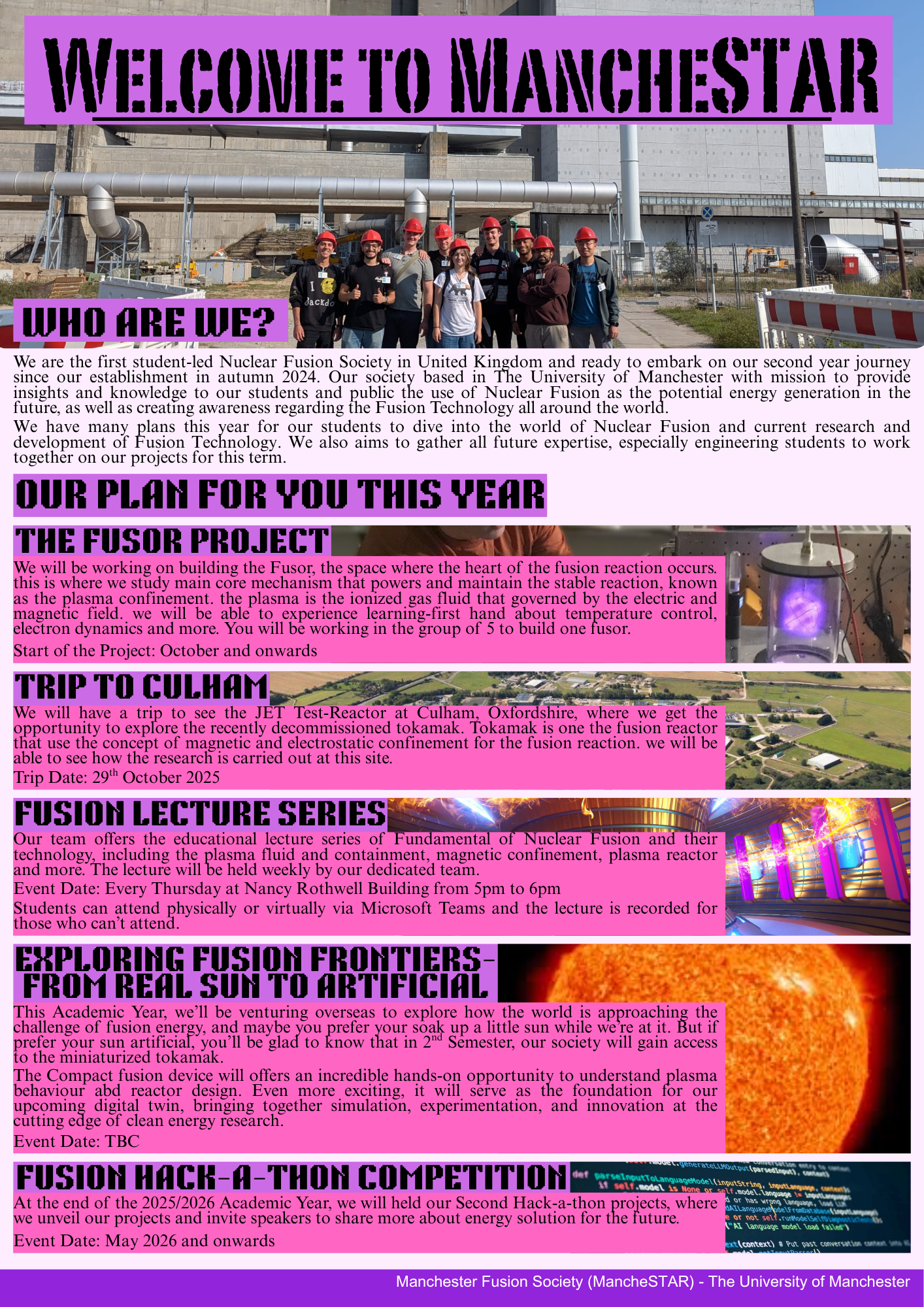

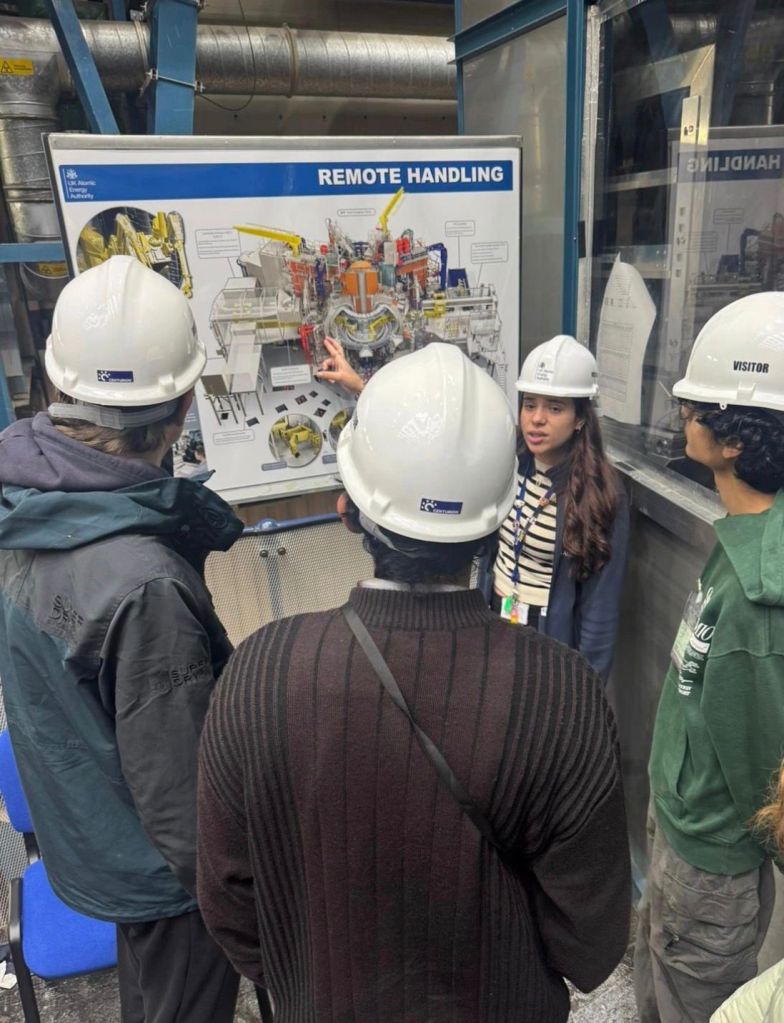
The tour guide explained about JET in Culham
The Culham Trip
On 26th October 2025, with a group of 29 students to see the Joint European Torus (JET), RACE & Material Research Facility (MRF). In Culham, JET is the biggest and most powerful Tokamak in the world so far. This reactor uses Deutirium-Tritium (D-T) Reaction to produce energy. This reaction is likely to be use in the future industry scale of fusor reactor. JET is made of 8 segments. We are able to view an eighth that was made as a redundant system to view the internals before walking around the whole device which is currently being decommissioned. We were also given opportunities to learn about MASCOT and other robot RACE. MASCOT also known as Manually-Aided Servo COntrolled Tool is the primary remote manipulation system which are used to maintain and analyze the interior of the JET. MASCOT is the vital part of the system as the interior of the JET itself is highly radioactive, extremely confined and full of fragile plasma component, making the JET interior accessible for human as a safety regulations. This system acts as a middle system between human control and the process system, which is known as the Master-Slave System.
More about MASCOT…
MASCOT tasks encompass the installation of plasma-facing tiles, the tightening and removal of bolts, cutting and welding, the replacement of diagnostics, and the handling of fragile components with a high degree of precision. Additionally, a 3D camera is employed to assist with visualizing the interior of the JET. In the control room, the 3D models are utilized to illustrate its movements and facilitate an understanding of the process involved in controlling MASCOT. A noteworthy aspect of the training is the requirement to successfully play Jenga with MASCOT prior to qualification for robot operation. This activity is crucial, as MASCOT demands exceptional precision, stable hands, and keen spatial awareness. Consequently, the training aims to cultivate skills such as fine motor control, 3D perception utilizing the camera, patience under pressure, strategic planning, and consistent hand-eye coordination.
Students really enjoyed getting up close, asking about very specific parts such as the difficulty of the control system and the principle of JET. Researchers were very helpful in showing us around the site and answering questions.
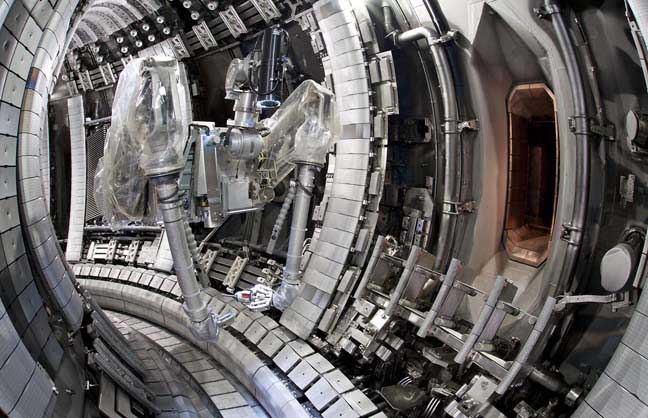
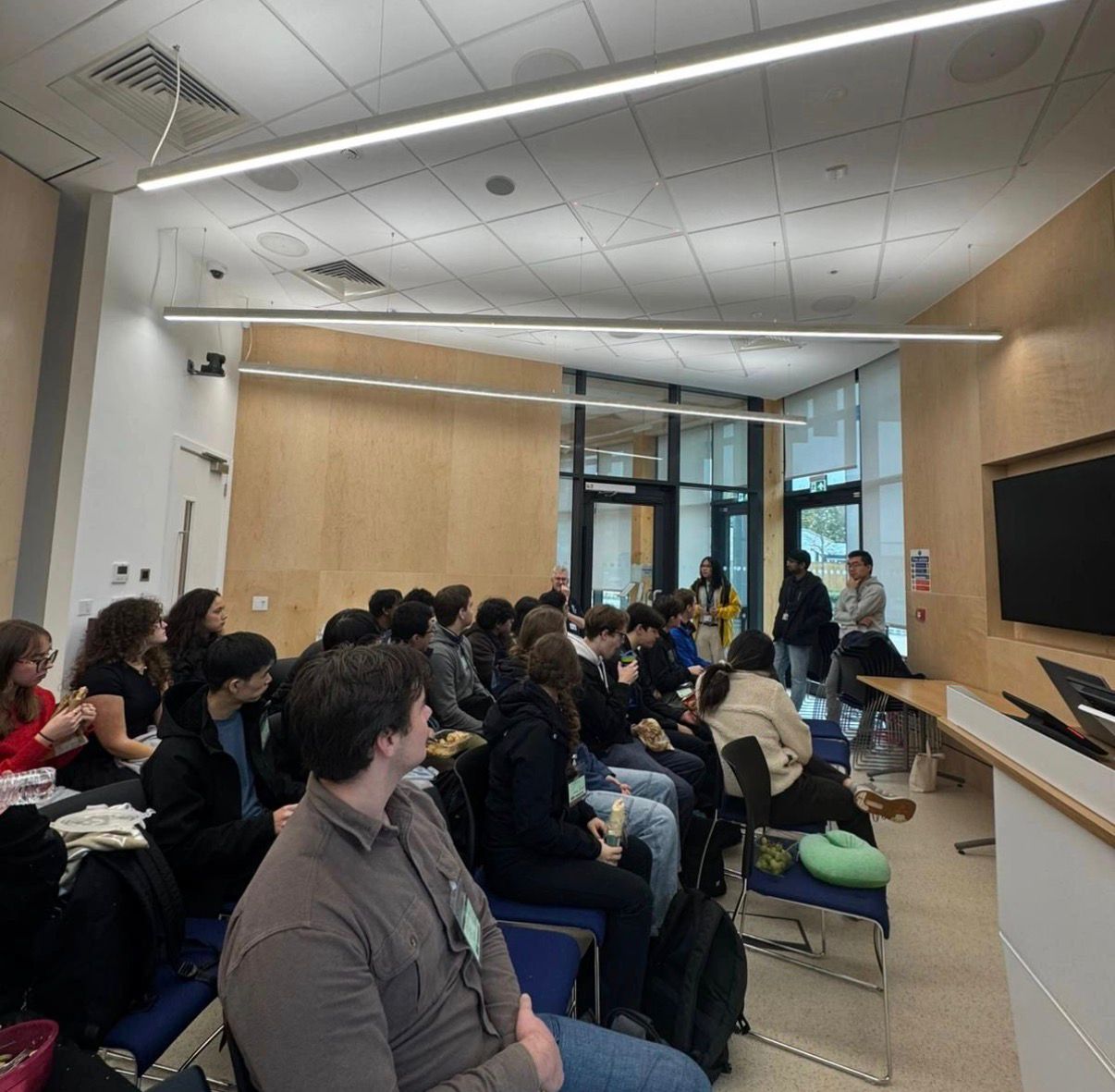
Seeing all the different technological devices was so exciting — it really showed me how many different areas come together in fusion and how each one plays a unique role
I also found out there are opportunities for summer placements with UKAEA, which got me really excited about the possibility of getting hands-on experience in the fusion industry.
Meeting Manchestar CO-Founder
We also met the the Co-Founder of Manchestar Society, who are also the alumni of The University of Manchester, Iman Jasni & Fengpo Wen to know about their work and experience as well as the graduates schemes and PHD opportunities with UKAEA.
What Does our students say…
I got to visit the RACE facility, and it honestly blew my mind! I always thought their robotics work was mainly for JET, but it’s so much more than that. They’re doing cutting-edge robotics research that goes way beyond fusion — some of the projects there even come from CERN! It was incredible seeing how much innovation is happening behind the scenes
Learning about the process of decommissioning a nuclear fusion reactor was genuinely fascinating — I had no idea how complex and carefully planned every step has to be!

Fusion Lecture Series
Every Thursday from 5:00 PM to 6:00 PM, our society hosts a weekly lecture series designed to introduce students to nuclear fusion and its associated technologies. The sessions aim to deepen understanding of fusion concepts and promote awareness of developments within the field. The lectures are delivered by PhD researchers Thomas Hughes and Charlotte Brown, both specializing in fusion science.
Why Fusion Lectures…
This series provides an excellent starting point for anyone curious about fusion, particularly those interested in reactor design, plasma confinement, and the broader technical landscape of the field. As our members come from a wide range of academic backgrounds, and because fusion is not widely covered in most degree programs, the lectures offer valuable foundational knowledge in key areas of fusion technology, including plasma physics, radiation damage, superconductivity, reactor systems, and tritium breeding.
The series also allows students to explore specific branches of fusion science that relate to their own disciplines. For example, chemical engineering students may be especially interested in the inner fuel cycle, which involves tritium breeding, isotope separation, and heat and fluid transfer. By making these connections, students can begin to see how their academic expertise aligns with real opportunities in the fusion sector, potentially inspiring them to pursue a future career in this rapidly growing field.


Lectures we have covered so far…
- Plasma Physics
- Reactor Design (Tokamak, Stellarators & etc)
- Tritium Breeding
- Radiation Damage
- Superconductivity
Students are able to join the lectures physically at Nancy Rothwell Buildings, or via the Microsoft Teams. If students missed out the lectures, there are recordings provided as well as slides for further studies.
Tell us your experiences of our lectures!
FEEDBACK FROM OUR MEMBERS
I’ve found the fusion lecture series really valuable because it’s helped me explore the field in much greater depth and understand the technologies that make fusion possible
The fusion lecture series really sparked my interest in fusion technology, especially when we learned about plasma behaviour and tokamak reactor design. It made me even more curious, and I’d love for us to dive deeper into the theory someday so we can build an even stronger understanding of the fundamentals.
I really appreciate how enthusiastic our speakers are when they talk about fusion energy. One of my favorite moments was learning about tritium breeding and the safety regulations involved. It made me think deeply about the future of fusion, as do we need to produce tritium for energy, but at the same time we have to protect human health and safety. It really made me pause and ask myself “is the balance worth it?”
FINDING YOUR FUTURE
IN FUSION TALK
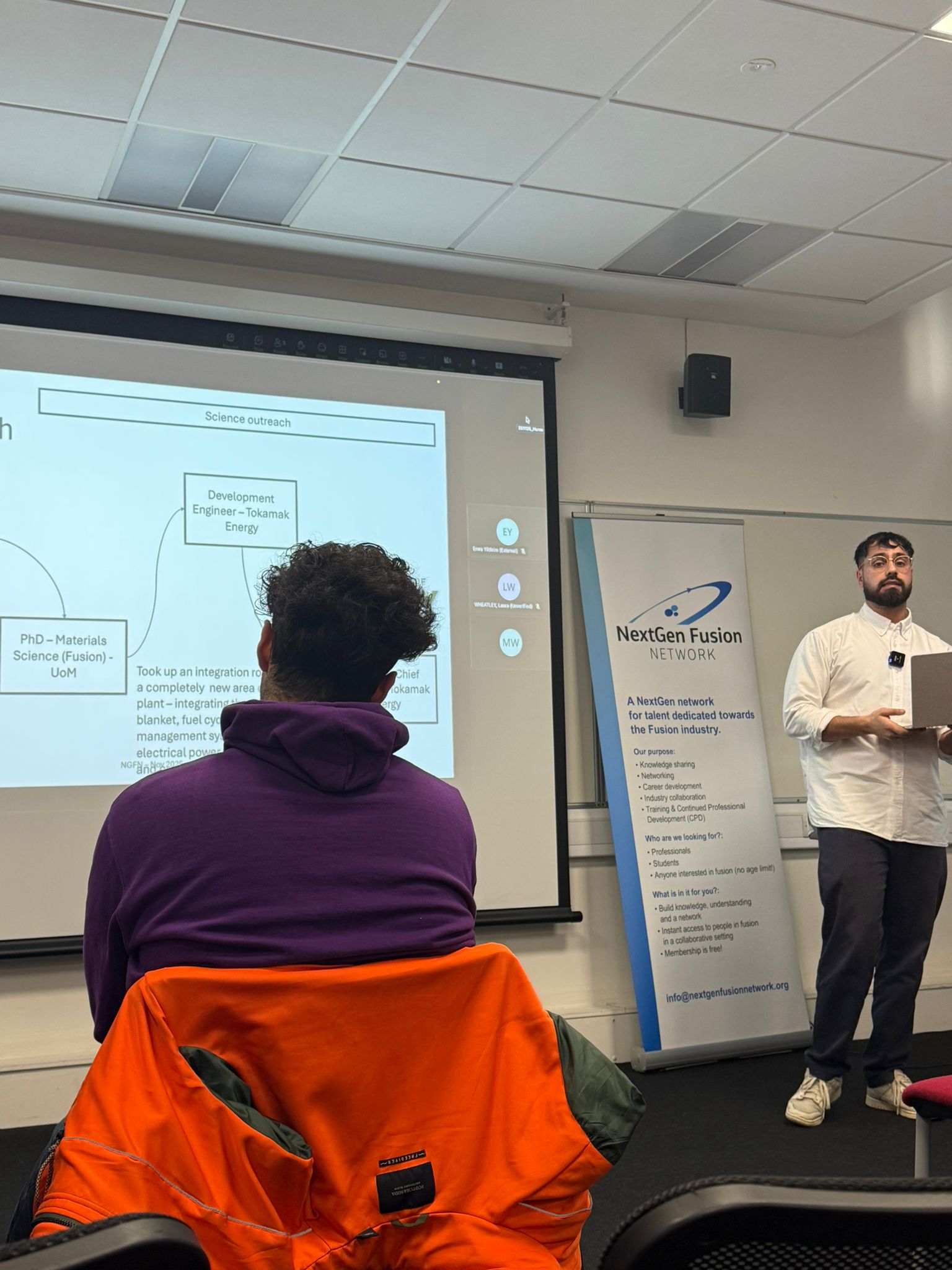
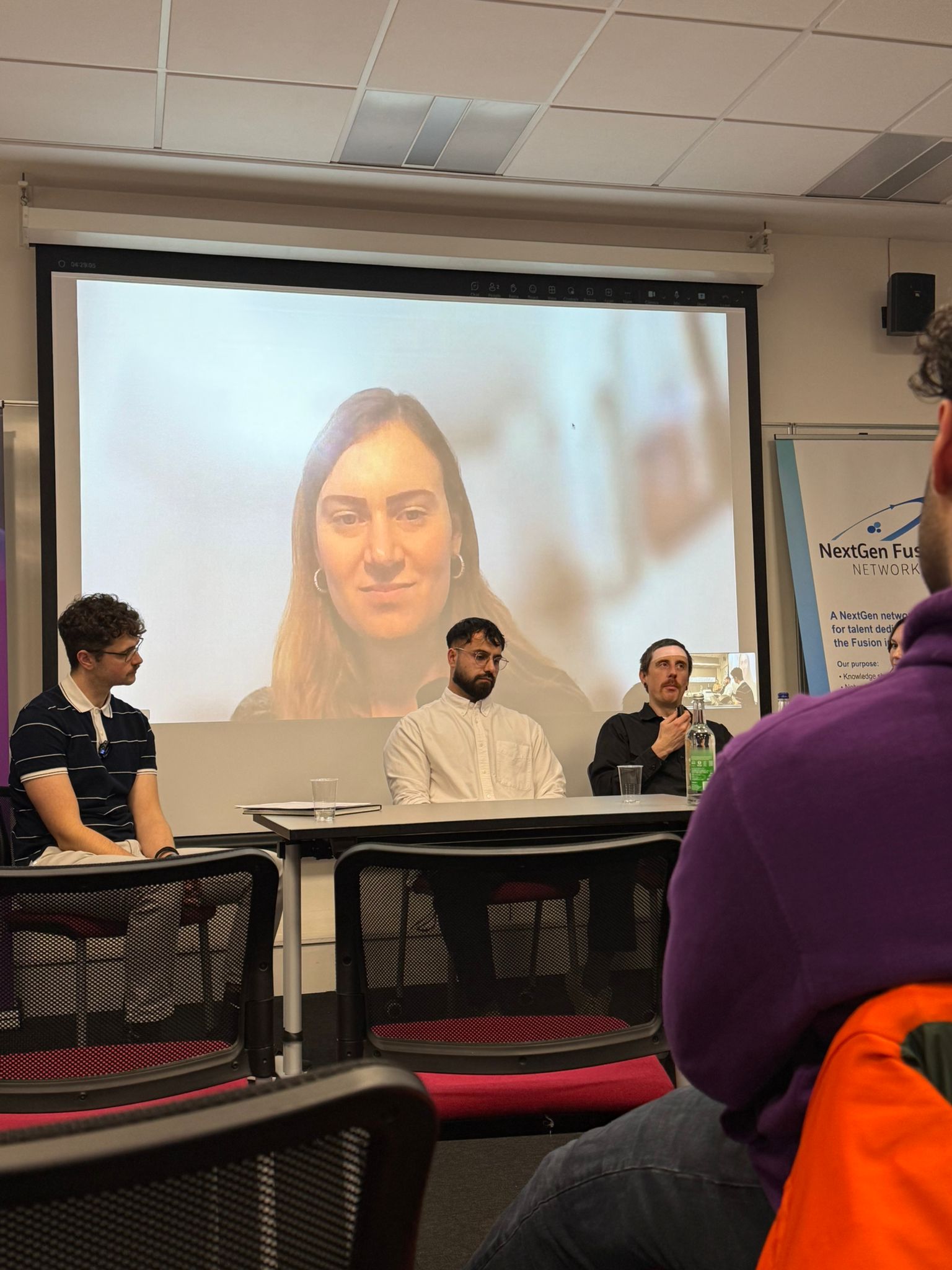
On 26th November 2025, the Dalton Nuclear Institute and NextGen Fusion jointly organised a fusion energy talk featuring speakers from a range of professional and academic backgrounds. Five speakers were invited to share their experiences and career journeys in fusion energy and technology: Laura Wheatley, Associate Fusion Engineer at the IAEA; Emma Hume, a PhD researcher at the University of York who recently completed her thesis on fast electron transport in ultra-intense laser interactions with nanowire targets; Emre Yildirim, Assistant Chief Engineer at Tokamak Energy working on the US DoE Fusion Pilot Plant Programme; and Stephen Biggs-Fox, Engineering Analyst in the Simulation Research Group at UKAEA.
The event took place in the Roscoe Buildings from 11:00 am to 4:00 pm and attracted a large audience, particularly PhD students interested in pursuing careers in the fusion industry. Several undergraduate students also attended to explore potential opportunities—such as PhD pathways and research and development graduate programmes—available after completing their degrees.
The session was moderated by Matthew Warner, a PhD student in fusion research, and provided attendees with valuable insights, reflections, and guidance about the rapidly evolving fusion sector.
Speaker sharing their journey…
The talk began with each speaker introducing themselves and sharing their personal journey in the fusion energy sector. Laura Wheatley opened the session by describing her role at the IAEA in Vienna, where working abroad has allowed her to meet people from a wide range of backgrounds and viewpoints; she emphasised how essential networking is in a global work culture, as it often leads to new opportunities and access to important information. The session then moved to Stephen Biggs-Fox, who spoke about his unexpected path into fusion—despite initially studying plasma physics, he never imagined working in this field, and shared how family commitments required him to turn down certain positions, yet he still found his place in fusion through persistence and passion. Following this, Emma Hume discussed her recently completed PhD research on laser interactions for fusion applications, highlighting the growing importance of laser technologies and their potential long-term influence on future fusion systems; she also offered an honest reflection on life as a PhD student, stressing the need for strong time management, motivation, and readiness to face challenges. The final speaker, Emre Yildirim—an alumnus of The University of Manchester—shared insights from his journey through the fusion industry, speaking about the importance of maintaining a healthy work–life balance and how each chapter of his career has offered different experiences, challenges, and learning opportunities for those aspiring to work in fusion
The speakers highlighted that despite these challenges, fusion research is accelerating worldwide, driven by both national laboratories and private companies, and that the industry is moving steadily toward commercialization. As a result, they stressed that demand for skilled scientists, engineers, and analysts is expected to grow rapidly—especially once fusion projects move beyond scientific demonstration and into large-scale industrial deployment, where expertise in areas like reactor operations, fuel cycle engineering, safety analysis, and advanced manufacturing will become increasingly crucial.
Second Session: Interview & QnA with the Speakers
The second session began at 2:00 pm with an interview and Q&A discussion involving all the speakers. One of the main themes that emerged was the idea that genuine passion for fusion can be a far stronger predictor of success than technical expertise alone, especially in such an interdisciplinary field. The speakers explained that fusion requires people who are curious, adaptable, and willing to learn new concepts—whether in plasma physics, materials science, robotics, or engineering—and that this intrinsic motivation often pushes individuals to understand complex ideas more deeply than formal training alone. They also offered guidance for students considering or currently pursuing a PhD in fusion, emphasizing the importance of financial planning, consistent wellbeing practices, and building a strong support system, as these factors significantly influence long-term productivity and resilience. The discussion also expanded into the broader future of the fusion industry, touching on the major challenges ahead, such as tritium supply, materials degradation, regulatory frameworks, and the transition from experimental devices to pilot plants.
The talk was very successful and informative, as well as changing one perspective on Fusion Technology.
Manchester Fusion Society
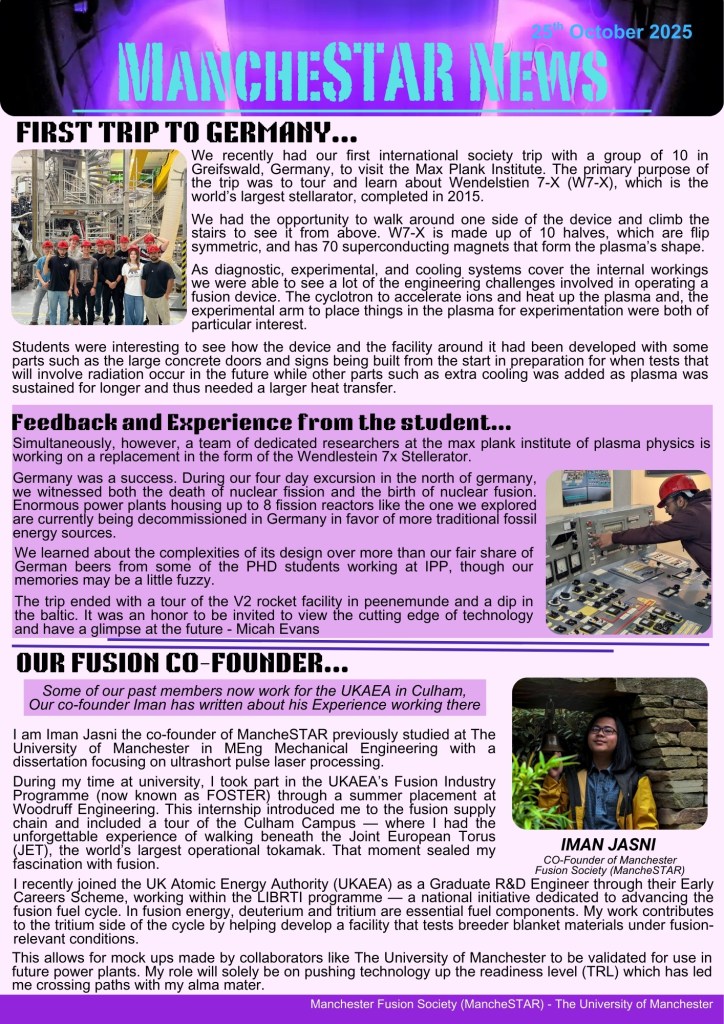
First led-student Society in the UK, aiming to bridge the gap between the students and fusion world. Follow our journey to discover the breakthrough of fusion and career.
Your Journey is Our Journey!
 manchestar-fusion.co.uk